
Flatbed dispatch
Flatbed and step deck dispatch services
We find flatbed and step deck loads that fit your deck and your securement gear, confirm the tarp and securement needs with the broker before you accept, negotiate the rate and handle the paperwork. You approve every load.
- A flat 5–12% per load
- You approve every load
- In business since 2017
At a glance
Flatbed dispatch means a dispatcher finds and books open-deck freight for your flatbed or step deck: steel, lumber, pipe, building materials and machinery. Digital Storming’s dispatchers confirm weight, dimensions and tarp and securement needs before you accept, for a flat 5–12% of each load’s gross. You approve every load, and there is no long-term contract.
- Equipment
- Flatbeds and step decks
- Loads
- Steel, lumber, building materials, machinery
- Dispatch fee
- A flat 5–12% of each load’s gross
- You decide
- Every load is booked only with your OK
Who it is for
Open-deck carriers we work with
Flatbed owner-operators
Open-deck tractors hauling steel, lumber and building materials who want a steady reload.
Step deck operators
A lower deck for taller machinery and equipment that would be over legal height on a flatbed.
Small open-deck fleets
Several trucks whose loads are planned around tarps, permits and each driver’s home time.
What is included
What we handle for your flatbed
Loads that fit your deck
Freight matched to your deck type, length and gear, so tarps and securement are settled before you accept.
Rate negotiation, tarp pay included
We negotiate the linehaul and ask for tarp pay and other extras when the load calls for them.
Securement and oversize details
Tarp size, tiedowns, edge protection, dimensions and any permits, confirmed with the broker and on the rate confirmation.
Broker calls and paperwork
We are the broker’s contact for updates, tarp and detention questions, and keep carrier packets, rate confirmations and load documents in order.
Freight and rates
Flatbed freight, and what moves the rate
Open-deck loads pay for the skill and time that securement takes, when the rate is negotiated well.
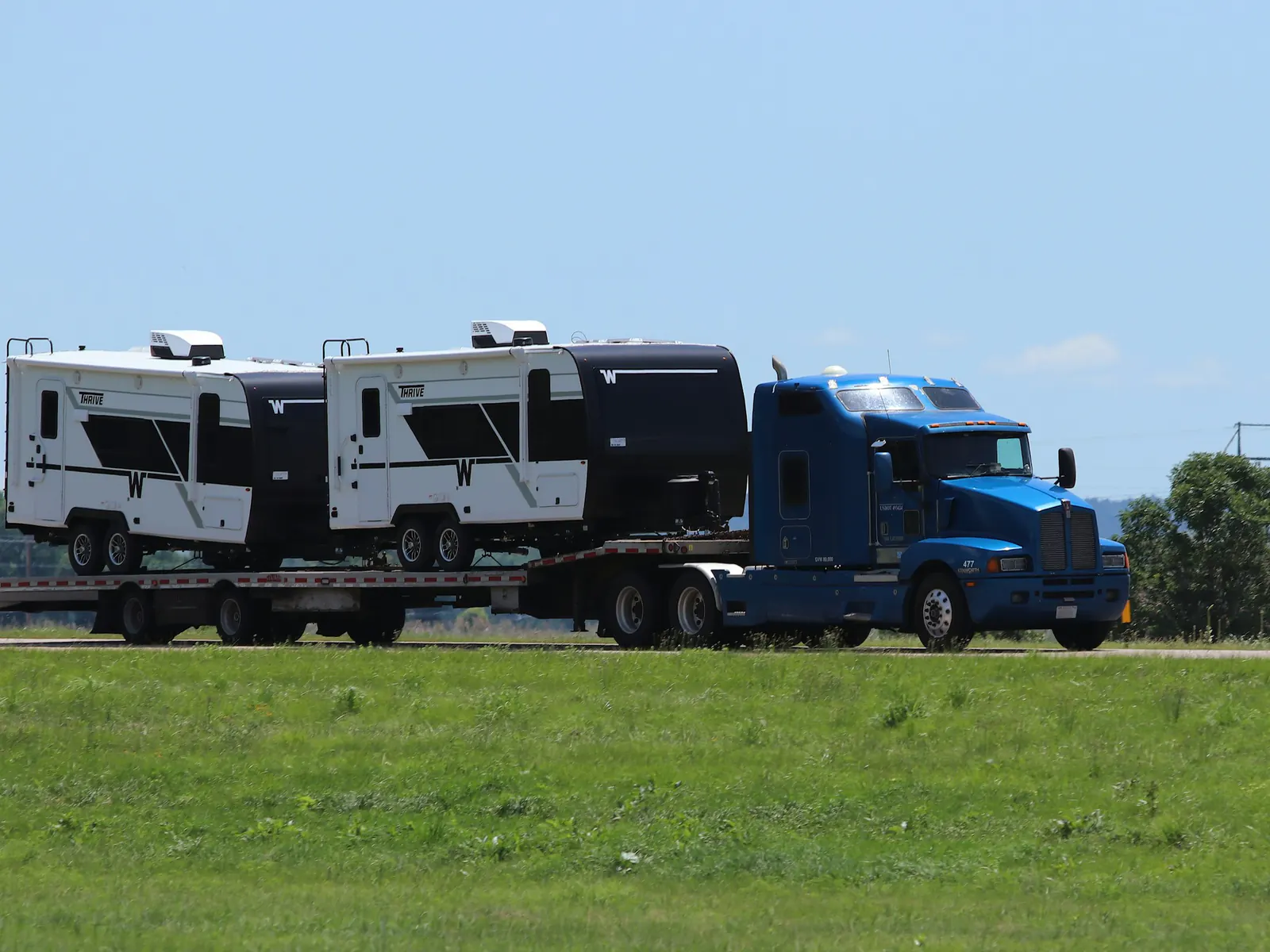
What flatbeds and step decks haul
- Lumber, plywood and other building materials
- Steel: coils, beams, pipe and rebar
- Machinery and construction equipment, taller pieces on a step deck
- Oversize loads, with the right permits
What makes loads hard to find or price
- Seasonal and regional. Construction and building-material freight rises and falls with the building season, so a lane that pays in one season can go quiet in the next.
- Securement takes time. Tarping and strapping add time at pickup and aren’t always paid, so we ask before booking.
- Height and width limits. Over 102 inches wide needs permits, and each state sets its own height limit; that is where a step deck earns its keep.
- Job-site deliveries. Unloading at a site can mean waiting for a crane or forklift, so we confirm how it unloads and the detention terms first.

How it works
How flatbed dispatch works
Step 1: Free consultation
Tell us your deck type and length, tarps and securement gear, the commodities you know, whether you’ll take oversize, your lanes and home time.
Step 2: Send your documents
Your MC authority, certificate of insurance and W-9. We fill in the carrier packets brokers ask for, with your deck type, tarps and securement gear.
Step 3: Approve your loads
Each load comes to you with weight, dimensions, tarp and securement needs and rate. Nothing is booked until you say yes.
Step 4: Haul, we plan the reload
You drive; we handle broker updates and load documents, and look for the reload near your delivery.
Pricing
Simple dispatch pricing
One pricing model for every operation, whether you drive solo or manage a growing fleet.
Dispatch fee
5–12%of each load’s gross
One flat percentage per load, negotiated by truck type and carrier profile. For owner-operators and fleets alike.
- No retainer and no weekly fee
- You approve every load
- No long-term contract
- Load search, rate negotiation and paperwork
- A dedicated dispatcher and load updates
- Multi-truck coordination for fleets
Tell us about your truck and we’ll tell you what we’d charge. To estimate it yourself, try the dispatch fee calculator or read our truck dispatcher cost guide.
Getting started
What you need to start
Documents to send
- Your operating authority (MC) letter and USDOT number
- Certificate of insurance
- W-9
- Your factoring company’s notice of assignment, if you factor
Securement and size rules
Tiedowns must have a combined working load limit of at least half the cargo’s weight, with a minimum number by the article’s length. You check the load within the first 50 miles, then at every change of duty status or every 3 hours or 150 miles, whichever comes first.
Width over 102 inches needs a permit, gross weight on the Interstate is capped at 80,000 lbs (states can permit loads that can’t be divided), and height limits are set by each state.
Sources (checked October 2026): 49 CFR 393.106 (tiedown working load limit) · 49 CFR 393.110 (number of tiedowns) · 49 CFR 392.9 (cargo checks on the road) · 23 CFR 658.15 (102-inch width) · 23 CFR 658.17 (80,000 lb gross weight) · FHWA, Federal Size Regulations for CMVs (height)
Questions
Flatbed dispatch questions
Do you dispatch step decks as well as flatbeds?
Yes. A step deck takes taller freight, such as machinery, that would be over legal height on a flatbed. There is no federal height limit: each state sets its own, mostly between 13 ft 6 in and 14 ft (FHWA), so we check the load height against your route before you accept.
Do you get tarp pay?
Tarp pay is negotiated per load, not guaranteed. When a load needs tarps we ask the broker for tarp pay and make sure it is on the rate confirmation before you accept.
Do you dispatch oversize loads?
When your equipment and experience fit, yes. Anything wider than 102 inches needs a state permit (23 CFR 658.15), so before you accept we confirm the dimensions, the permits and who arranges them.
What securement rules apply to flatbed loads?
FMCSA’s cargo securement rules: the tiedowns’ combined working load limit must be at least half the cargo’s weight (49 CFR 393.106), with a minimum number of tiedowns by length (49 CFR 393.110) and extra rules for commodities such as lumber, metal coils and heavy machinery. You also re-check the load on the road (49 CFR 392.9).
How much does flatbed dispatch cost?
The same as all our dispatch: a flat 5–12% of each load’s gross, set by your truck type and carrier profile, with no retainer and no weekly fee. Tell us about your deck and we’ll tell you what we’d charge.
Ready to keep your deck loaded?
Tell us about your trailer, your gear and your lanes.
Mon–Sat, 9:00 AM – 6:00 PM ET · We reply within one business day
Related services
Truck Dispatch Services
Dispatchers who find and negotiate loads for your truck and lanes. A flat 5–12% per load; you approve every load.
Freight Factoring
Get paid on delivered loads sooner: we set you up with our factoring partner, Porter Freight Funding.
CDL Protection Plans
Help with citations, DOT inspections, ELD issues and CSA scores for drivers and fleets.
DOT Compliance Services
IFTA, UCR, drug and alcohol consortium enrollment, DOT audit preparation and CSA support.